
Whisking ceremonial matcha: technique, and what the hype leaves out
Editorial notice: This is an educational guide, not a product recommendation. PowderedPurple is not currently affiliated with any brand or retailer mentioned, no links here are affiliate links, and PowderedPurple does not earn commission from them.
Matcha is shade-grown tea leaf, ground to powder and whisked into water rather than steeped and strained. Because you drink the whole leaf, both the technique and the caffeine load differ from ordinary green tea.
The method
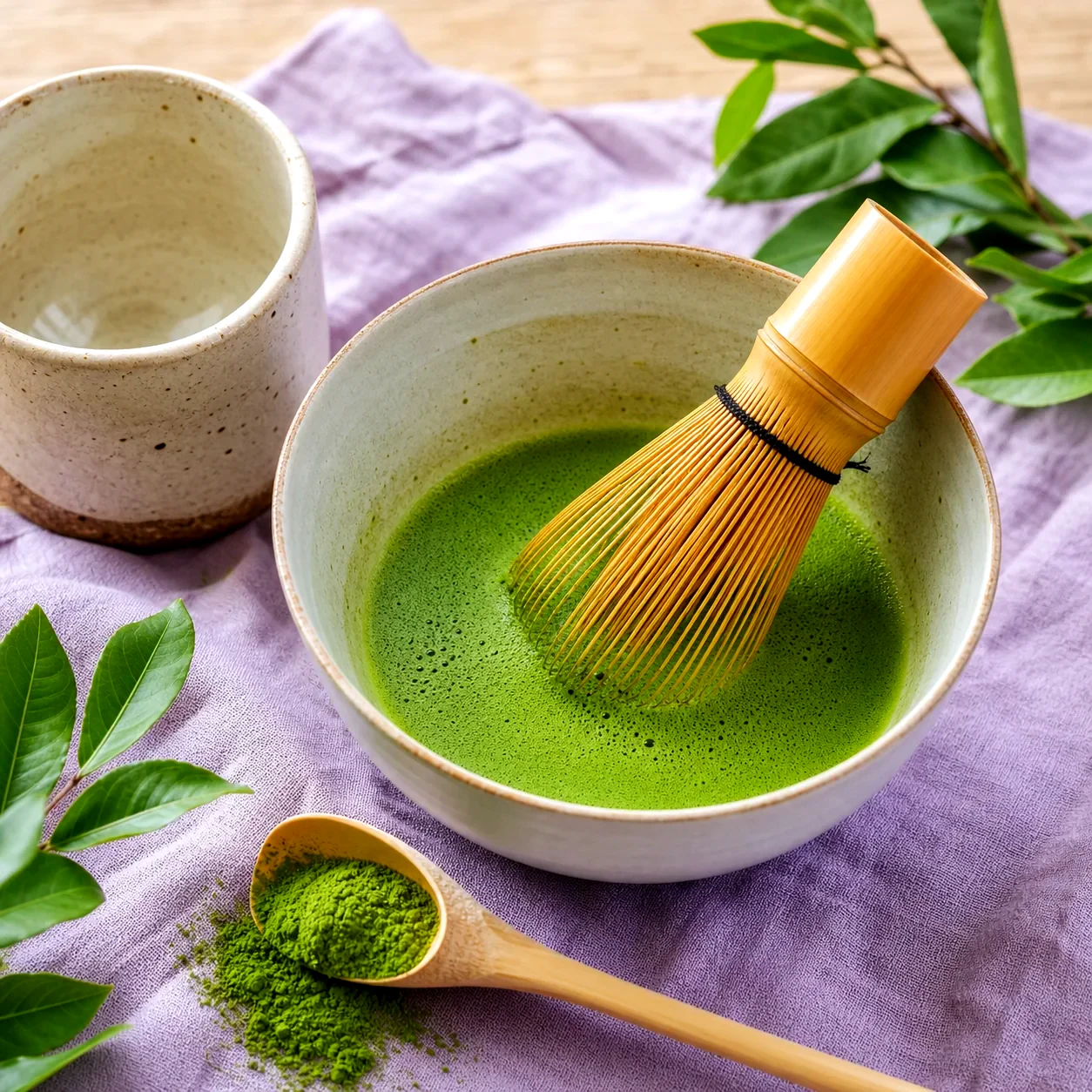
- Sift. One to two teaspoons through a fine sieve into your bowl. Matcha clumps in the tin, and no amount of whisking fully rescues an unsifted bowl. This is the step people skip and then blame the powder for.
- Add water below boiling. Around 70–80 °C, about 60 ml to start. Boiling water scorches matcha and turns it bitter. If you have no thermometer, boil then wait two minutes.
- Whisk in a W, not a circle. Brisk zig-zags with the wrist, not the arm, for 15–20 seconds. Circular stirring pushes powder to the sides; the W motion aerates.
- Stop at a fine foam. You want a layer of small even bubbles across the surface. Large bubbles mean it needs more whisking.
- Drink it, or build on it. Straight, or top with hot or cold milk for a latte.
Caring for the whisk
The bamboo whisk is the component that decides your results and the one most easily ruined. Rinse in warm water only — never soap, never a dishwasher — and dry on a whisk stand so the prongs hold their curve. A whisk dried flat in a drawer splays and stops aerating within weeks.
Fixing the common problems
- Bitter — water too hot, or a later-harvest powder better suited to lattes.
- Gritty — not sifted, or under-whisked.
- No foam — too much water for the powder, or a splayed whisk.
- Dull and flat-tasting — the powder has oxidised. Matcha degrades fast once opened; keep it sealed in the fridge and finish it within a month or two.
Caffeine and L-theanine, honestly
Matcha contains caffeine and L-theanine, an amino acid found in tea. The commonly described “calm alert” feeling is attributed to the combination. That description is popular and plausible; it is not the same as a proven clinical effect.
The practical fact worth more than the theory: because you consume the whole leaf, matcha delivers more caffeine per gram than steeped green tea. If you are caffeine-sensitive, pregnant, or drinking it late in the day, that is the relevant consideration.
What a green drink is not
Matcha is a tea. It is not a treatment for anything, and it is not automatically healthy once it is a sweetened latte — a shop-made matcha drink can carry as much sugar as a dessert. Listings presenting matcha as a metabolism, detox or disease intervention are making claims FTC — Health Products Compliance Guidance would expect to see substantiated.
Related reading: how to evaluate a ceremonial matcha starter set.
Editorial status
- Author
- PowderedPurple Editorial Team
- Last reviewed
- Next scheduled review
- Monetisation
- Editorial only — no affiliate relationship exists for this guide.
- Corrections
- info@powderedpurple.com
References
Checked and reachable on 1 August 2026.