
How to evaluate a ceremonial matcha starter set
Editorial notice: This is a category buying guide, not a product recommendation. PowderedPurple is not currently affiliated with any brand or retailer mentioned here, no links on this page are affiliate links, and PowderedPurple does not earn commission from them.
“Ceremonial grade” is the most-used and least-regulated phrase in the matcha category. This guide covers what actually separates a good starter set from an expensive one.
1. Know that the grade terms are not standardised
There is no governing body certifying “ceremonial” or “culinary” grade. Any seller may use either term. The words describe an intended use — drinking versus cooking — rather than a verified quality tier.
That does not make the distinction meaningless. It means you have to verify it with the attributes below rather than trusting the label.
2. Judge colour, then smell
Two checks that are hard to fake:
- Colour. Good drinking matcha is a vivid, almost electric green. Dull, olive, yellowish or khaki powder indicates older leaf, later harvest, stem content or oxidation.
- Aroma. Fresh matcha smells sweet, grassy and marine. A hay-like or flat smell means it has been sitting.
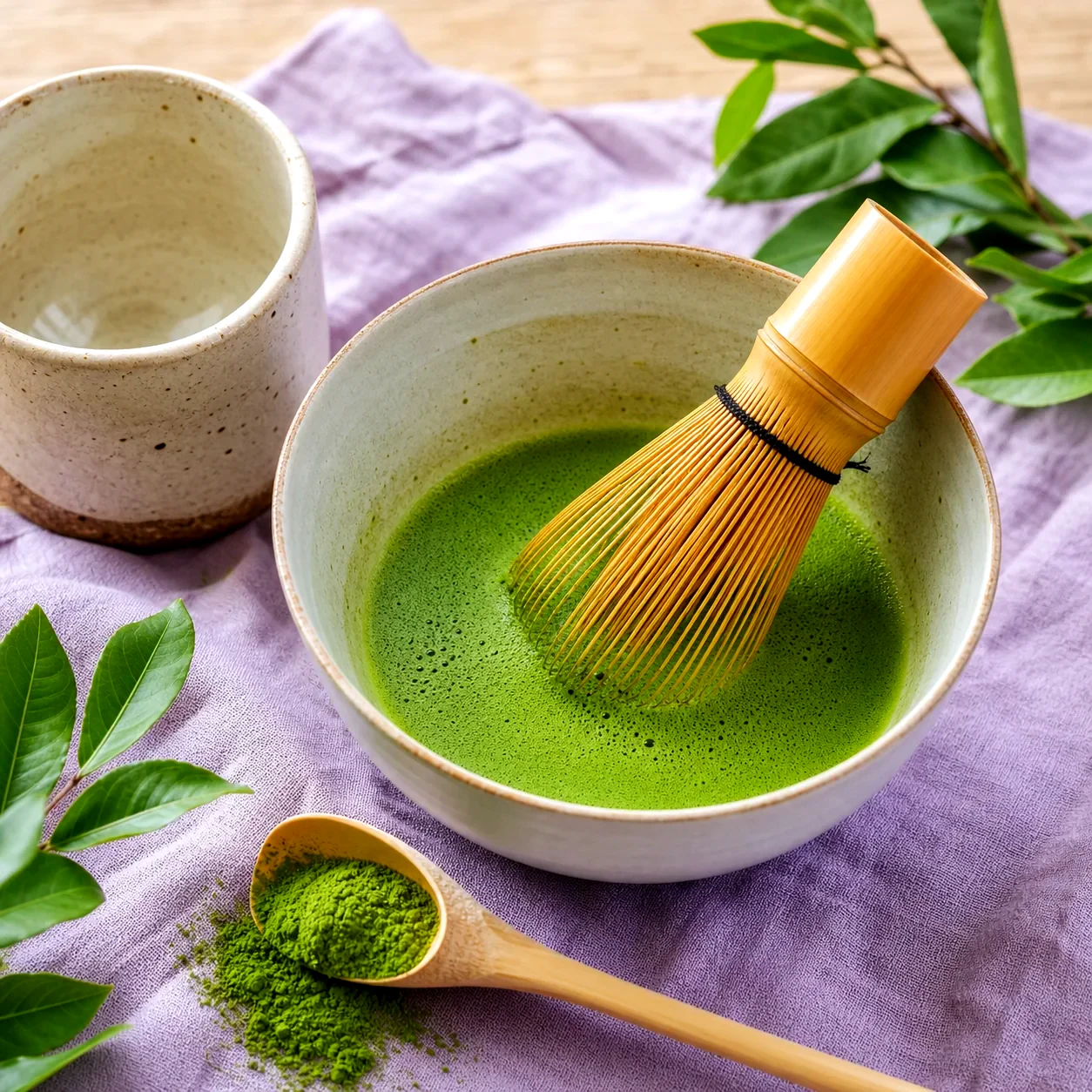
These are also why buying matcha from a photograph is unreliable, and why colour-corrected product photography is worth treating sceptically.
3. Check origin and harvest specificity
Specificity is the signal. A seller who names the prefecture — Uji, Nishio, Kagoshima, Yame — and states first harvest is telling you something checkable. “Product of Japan” alone is not.
First-harvest leaf is younger and sweeter, which is what you want for drinking with water. Later harvests are more astringent and better suited to lattes and baking — a legitimate choice, but it should be priced accordingly.
4. Treat packaging and dates as a freshness question
Matcha degrades quickly once ground, and faster once opened. Look for:
- An opaque, airtight tin or pouch — never clear packaging.
- A harvest or production date, not only a best-before date.
- A modest quantity. A 30–40 g tin you finish in a month beats a 100 g tin that fades.
Once open, matcha belongs in the fridge, sealed.
5. Work out which tools are worth the money
A typical starter set includes a whisk, a scoop, a bowl and sometimes a sifter and whisk stand.
- Whisk (chasen) — the one component that genuinely matters. Bamboo, ideally 80 prongs or more. Cheap whisks with thick, few prongs will not produce a proper suspension.
- Whisk stand — unglamorous but it preserves the whisk shape and materially extends its life. Worth having.
- Sifter — matcha clumps; sifting is the difference between smooth and gritty. A fine kitchen sieve does the same job.
- Bowl (chawan) — pleasant, not essential. Any wide bowl works.
- Scoop (chashaku) — traditional, but a half-teaspoon measure is more repeatable.
A set pairing mediocre powder with an elaborate bowl is usually the wrong allocation. Spend on the powder and the whisk.
6. Read the health claims carefully
Matcha is a tea. It contains caffeine and L-theanine, and green tea catechins are genuinely studied. What it is not is a treatment for anything, and listings that present it as a metabolism, detox or disease intervention are making claims that FTC — Health Products Compliance Guidance would expect to see substantiated.
Worth knowing practically: because you consume the whole leaf, matcha delivers more caffeine per gram than steeped green tea. If you are caffeine-sensitive or pregnant, that is the relevant consideration.
7. Compare on price per gram
Tin sizes vary widely, which makes headline prices incomparable. Convert to price per gram, then judge against the specificity of the origin and harvest information. Genuinely good first-harvest matcha is not cheap; very cheap matcha described as ceremonial is the clearest signal in the category.
The short version
- Vivid green, sweet grassy aroma.
- Named region and stated first harvest.
- Opaque airtight packaging with a production date.
- An 80-plus prong bamboo whisk and a stand.
- Price per gram, compared against how specific the sourcing information is.
Editorial status
- Author
- PowderedPurple Editorial Team
- Responsible publisher
- PowderedPurple (Pty) Ltd
- Last reviewed
- Next scheduled review
- Monetisation
- Editorial only — no affiliate relationship exists for this guide.
- Corrections history
- Corrections are logged by PowderedPurple (Pty) Ltd. View the corrections record or email info@powderedpurple.com.
References
Checked and reachable on 1 August 2026.