
How to Read Eyeglasses and Sunglasses Frame Measurements
Understand lens width, bridge width and temple length, then compare a frame with one you already wear.
Editorial notice: This guide is independent editorial research, not a product recommendation or ranking. The links on this page are not affiliate links, and PowderedPurple does not earn commission from them. Some PowderedPurple product profiles it links to carry clearly disclosed paid links to the retailer.
How this guide is built: It explains what to compare from published product information. PowderedPurple has not physically tested the frames discussed here. Retailer listings can be incomplete or change; verify the exact item with the seller before purchase.
What the three numbers mean
A code such as 52–18–140 usually gives lens width, bridge width and temple length, in millimetres and in that order. Lens width measures one lens, bridge width measures the space between lenses, and temple length describes each arm from hinge to tip. Check the seller’s key for the model because formats and the fields supplied can vary.
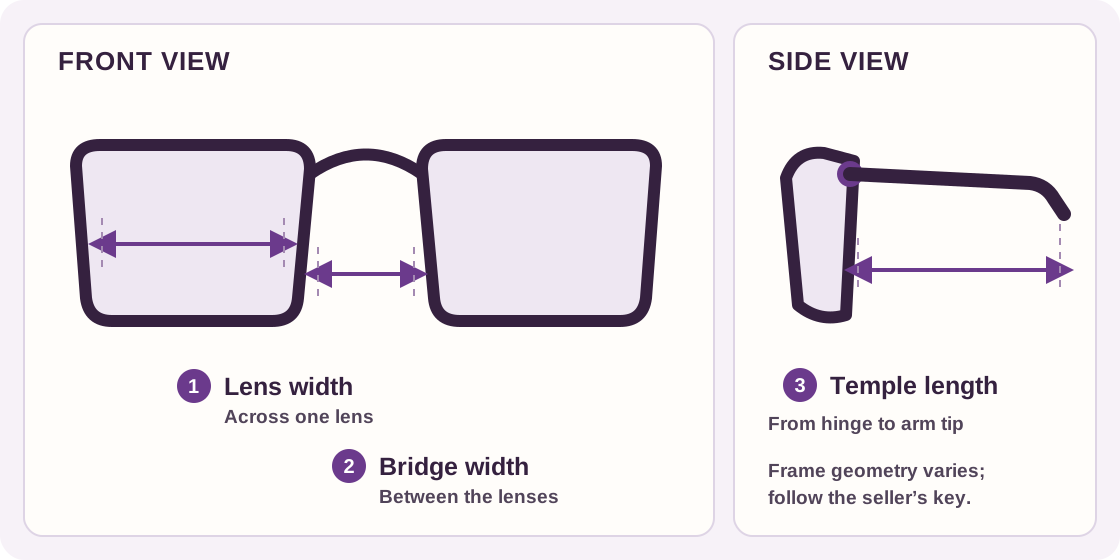
Warby Parker’s measurement guide illustrates where these numbers appear and what they represent.
Use a frame that already fits as a reference
Read the numbers inside a pair you find comfortable, then compare each measurement with the candidate frame. A close match is a starting point, not a promise: total frame width, bridge shape, nose pads, lens height and the curve of the temples also affect how a frame sits. Two frames with the same lens and bridge numbers can still feel different.
If the listing omits total width or bridge details, record that as unknown. Do not infer those measurements from a product photograph or convert a lens width into a face-width guarantee.
When fit needs a professional check
For prescription eyewear, stronger prescriptions, unusual bridge fit or discomfort, ask an optician to check the frame and lens requirements. A retailer’s “standard fit” label is not an individual fitting. PowderedPurple product profiles show the fields that were published for a listing and identify missing measurements where possible.
You can also browse listings with all three measurements recorded. This directory reflects only the current catalogue coverage.
Browse eyeglasses or see the eyewear hub.
Editorial status
- Author
- PowderedPurple Editorial Team
- Responsible publisher
- PowderedPurple (Pty) Ltd
- Last reviewed
- Next scheduled review
- Hands-on testing
- None claimed. The guide uses cited public sources and retailer-listed product details.
- Monetisation
- Editorial only. This page carries no affiliate links.
- Corrections history
- Corrections are logged by PowderedPurple (Pty) Ltd. View the corrections record or email info@powderedpurple.com.
Sources
Sources were checked on 25 September 2026 and are cited for the specific points they support.
Return to the eyewear research hub · Browse the South African eyewear catalogue