
How to check product claims before trusting a product listing
Editorial notice: This Journal article is independent educational content. This page currently contains no affiliate links and no paid placement. Product information should be checked against the cited sources and current product label.
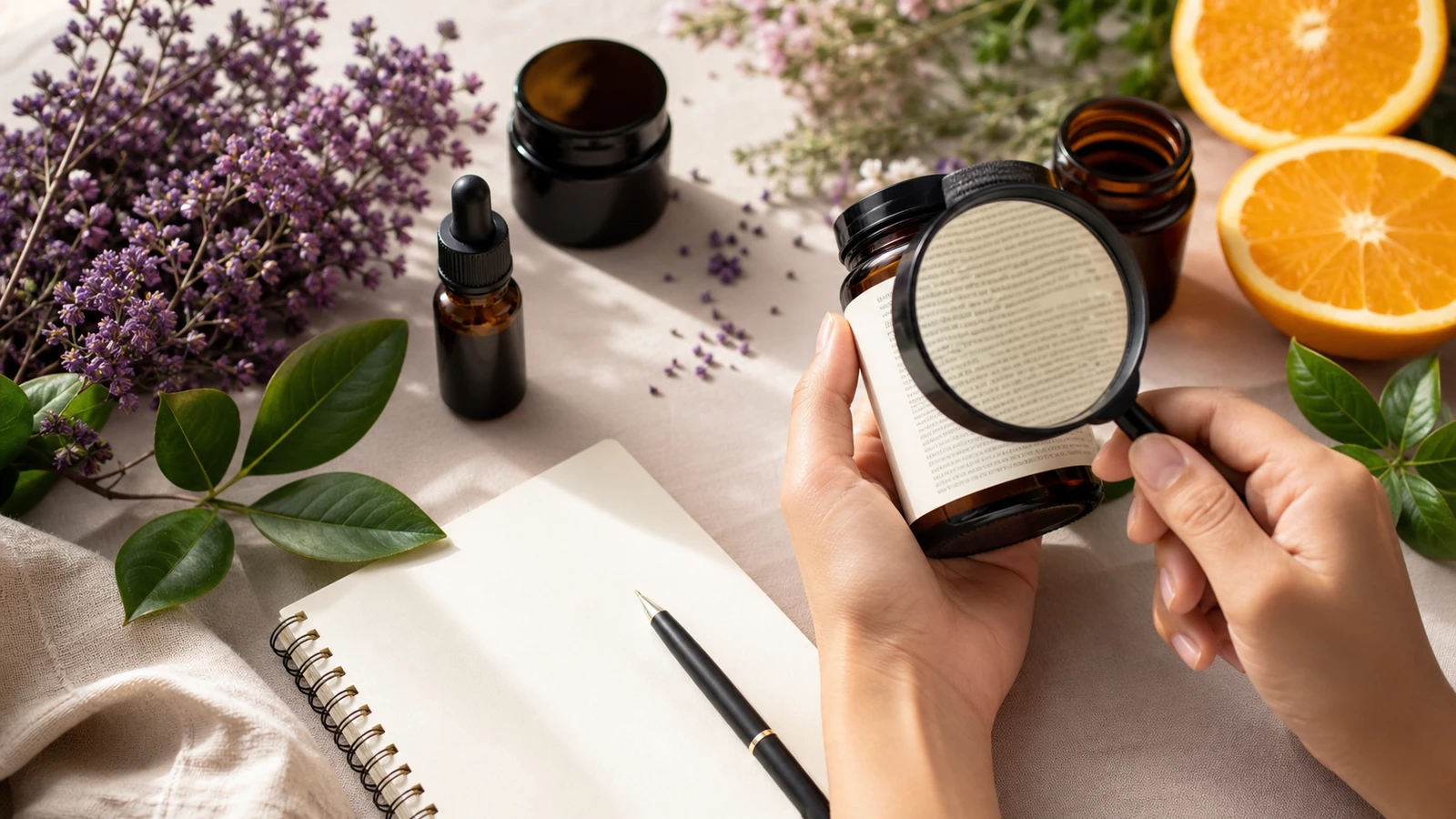
A good product listing should help a reader make a decision. A weak listing asks the reader to trust attractive words without showing the evidence, dose, limitations or source.
1. Identify the exact active ingredient
Do not stop at the marketing name. Look for the active compound, extract type, strength, serving size and whether the product explains standardisation. If the active ingredient is vague, the claim should be treated as vague too.
2. Separate support language from treatment language
Words like "supports" and "helps maintain" are different from claims that a product treats, cures or prevents a condition. The more medical the claim sounds, the more evidence and regulatory care it needs.
3. Check whether the source is current
Prices, stock, retailer descriptions and product labels change. A trustworthy article should name the source and make it easy to re-check the claim at the retailer or manufacturer.
4. Look for the caveat
Every product has a boundary: unsuitable audiences, medication interactions, pregnancy or breastfeeding considerations, age limits, allergy concerns or simply the fact that results vary. Clear caveats build trust.
If an affiliate page only shows upside, it is not giving the reader enough context.
Editorial status
- Author
- PowderedPurple Editorial Team
- Accountable editor
- Bohlokoa, publisher and editor
- Responsible publisher
- PowderedPurple (Pty) Ltd
- Last reviewed
- Next scheduled review
- Corrections history
- Corrections are logged by PowderedPurple (Pty) Ltd. View the corrections record or email info@powderedpurple.com.
Editorial source
This article was reviewed by the PowderedPurple editorial team on 30 July 2026. Read FDA: Cosmetics Labeling Claims.
4. Ask who is making the claim
Three different parties can make a claim about the same product, and they carry different weight.
- The label. What is printed on the pack sits inside a regulatory framework — in South Africa, SAHPRA’s complementary medicines framework. It is the most accountable claim attached to the product.
- The manufacturer’s marketing. Website and campaign copy is often broader than the label and is where most overreach originates.
- The retailer or affiliate listing. Frequently the least accurate, because it is written for conversion, sometimes by someone who has never handled the product.
When these disagree, the label wins. A listing claiming benefits the label does not state is telling you about the listing, not the product.
5. Look for the dose behind the ingredient
An ingredient appearing on a label does not mean it appears in a quantity anyone has studied. This is the single most common gap between a product and the research used to sell it.
Check the amount per serving against the amount used in whatever research is being referenced. A blend that lists twelve botanicals in a 500 mg proprietary blend cannot contain a meaningful dose of most of them. Proprietary blends are worth particular scepticism precisely because they withhold the numbers needed to make this check.
6. Notice the verb
Verbs carry the regulatory weight, and learning to read them is quick.
- Contains, provides, supplies — compositional statements. Checkable against the label.
- Supports, helps maintain, contributes to — structure/function language. Weaker and more permissible, but still requiring substantiation.
- Treats, cures, prevents, reverses, heals — medicinal claims. These require a level of evidence and regulatory approval that a cosmetic or at-home device listing almost never has.
- Clinically proven — requires competent and reliable scientific evidence under FTC Health Products Compliance Guidance. Frequently applied to products whose supporting study was small, short or funded by the ingredient supplier.
7. Check the evidence actually says what is implied
Where a listing cites research, four questions usually settle it:
- Was the study in humans, or in cells or animals? Preclinical results do not transfer.
- Did it use this ingredient in this form and dose, or a concentrated extract at many times the amount?
- How many participants, and for how long? Twenty people over four weeks is a signal, not a demonstration.
- Who funded it? Industry funding does not invalidate a study, but it is context worth having.
FDA — Cosmetics Labeling Claims and FDA — Is It a Cosmetic, a Drug, or Both? are useful starting points for checking where a beauty claim crosses from appearance into a medicinal claim the product cannot carry.
8. Watch for the claims that are missing
A listing that lists benefits and no cautions is incomplete regardless of how accurate the benefits are. Real products have interactions, contraindications and groups who should avoid them. Absence of that information is itself a quality signal — usually a negative one.
A five-minute version
When there is not time for a full check:
- Find the elemental amount of the active ingredient. If it is absent, stop.
- Read the verb in the main claim. If it is medicinal, treat the whole listing as unreliable.
- Look for a caution or interaction statement. If there is none, assume the listing is incomplete.
- Check whether the source is dated and reachable. If not, the claim cannot be re-verified.
Four checks, and they eliminate most of what is wrong with product listings.
Disclosure: PowderedPurple participates in affiliate programmes, but this article contains no affiliate links and PowderedPurple receives no commission from the products or retailers mentioned here. This article is not medical advice.