
Herbal tea and caffeine: the label details behind a calming cup
Editorial notice: This Journal article is independent educational content. This page currently contains no affiliate links and no paid placement. Product information should be checked against the cited sources and current product label.
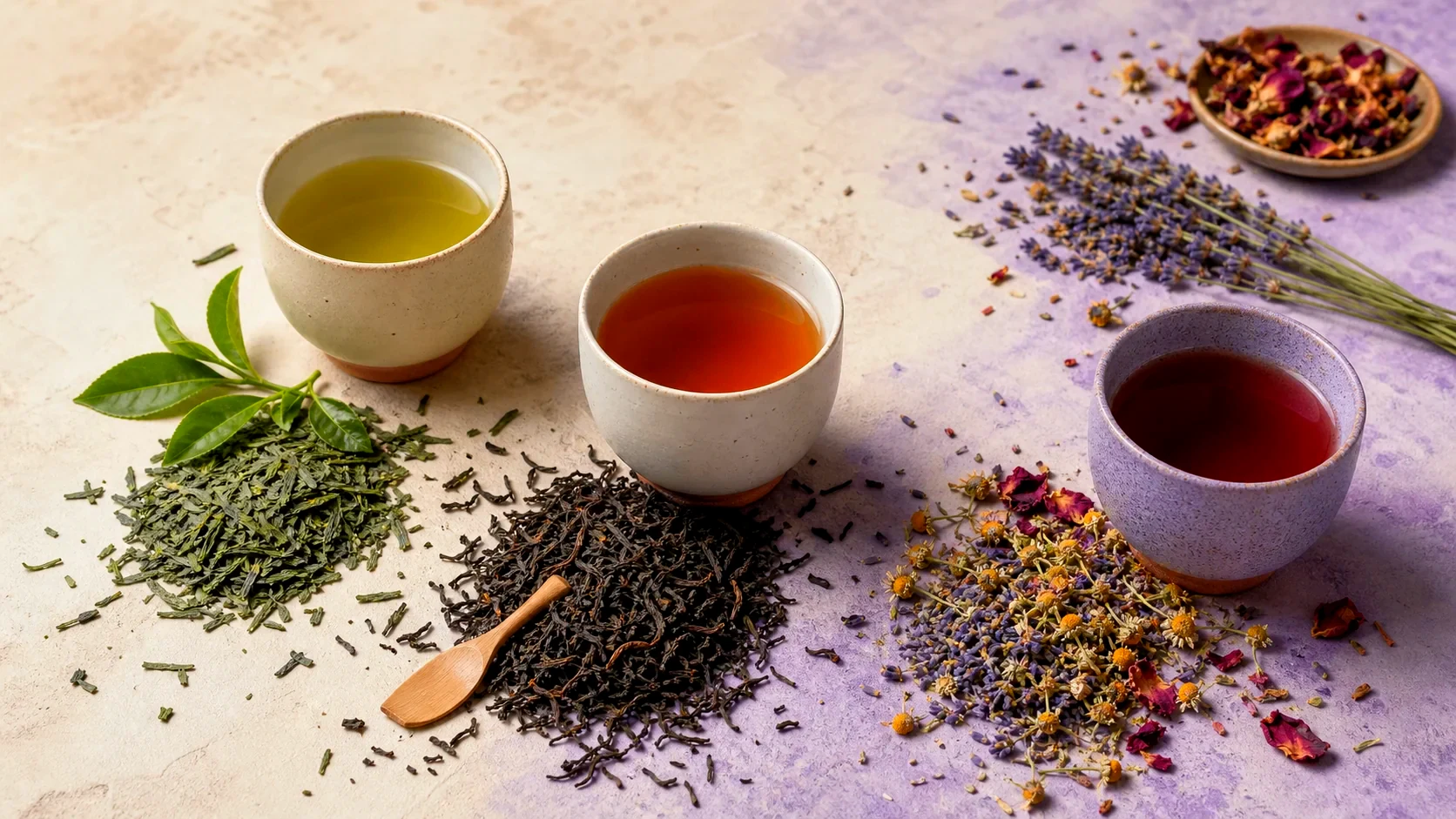
Tea and herbal infusion are not the same
Green, black and white teas come from the tea plant and naturally contain caffeine. Herbal infusions use other plants and may be caffeine-free, but a blend can include tea, guarana, yerba mate or another caffeinated ingredient. The name on the front is not enough; read the full ingredient list.
Caffeine depends on more than the plant
Preparation time, water temperature, serving size and blend composition can change the amount consumed. A label may not give a precise caffeine number. That is a reason to write carefully, not a reason to invent one. People sensitive to caffeine should consider timing and total daily intake.
Traditional use needs context
Herbs have long histories of traditional use, but tradition is not the same as clinical proof. A responsible article can explain how a plant is described and what safety information is supplied while avoiding treatment or prevention language. Some herbs can interact with medicines, so “natural” is not a safety shortcut.
Preparation is part of the product
Compare loose leaf or bags, serving size, steep time, added flavours, sweeteners, origin and storage. These details influence taste and convenience more reliably than broad wellness language. A visual still life should support the topic without implying a therapeutic outcome.
A helpful buying lens
The most useful product profile answers: what plant is present, is caffeine expected, how is it prepared, what cautions are stated and where was the information checked? That is enough to make a better everyday choice without overclaiming.
Editorial status
- Author
- PowderedPurple Editorial Team
- Responsible publisher
- PowderedPurple (Pty) Ltd
- Last reviewed
- Next scheduled review
- Clinical review
- Not reviewed by a registered healthcare professional. This article is limited to public sources and editorial explanation.
- Corrections history
- Corrections are logged by PowderedPurple (Pty) Ltd. View the corrections record or email info@powderedpurple.com.
References
Sources were selected for public accessibility and checked on 1 August 2026.