
Creatine monohydrate: what to compare before choosing a powder
Editorial notice: This Journal article is independent educational content. This page currently contains no affiliate links and no paid placement. Product information should be checked against the cited sources and current product label.
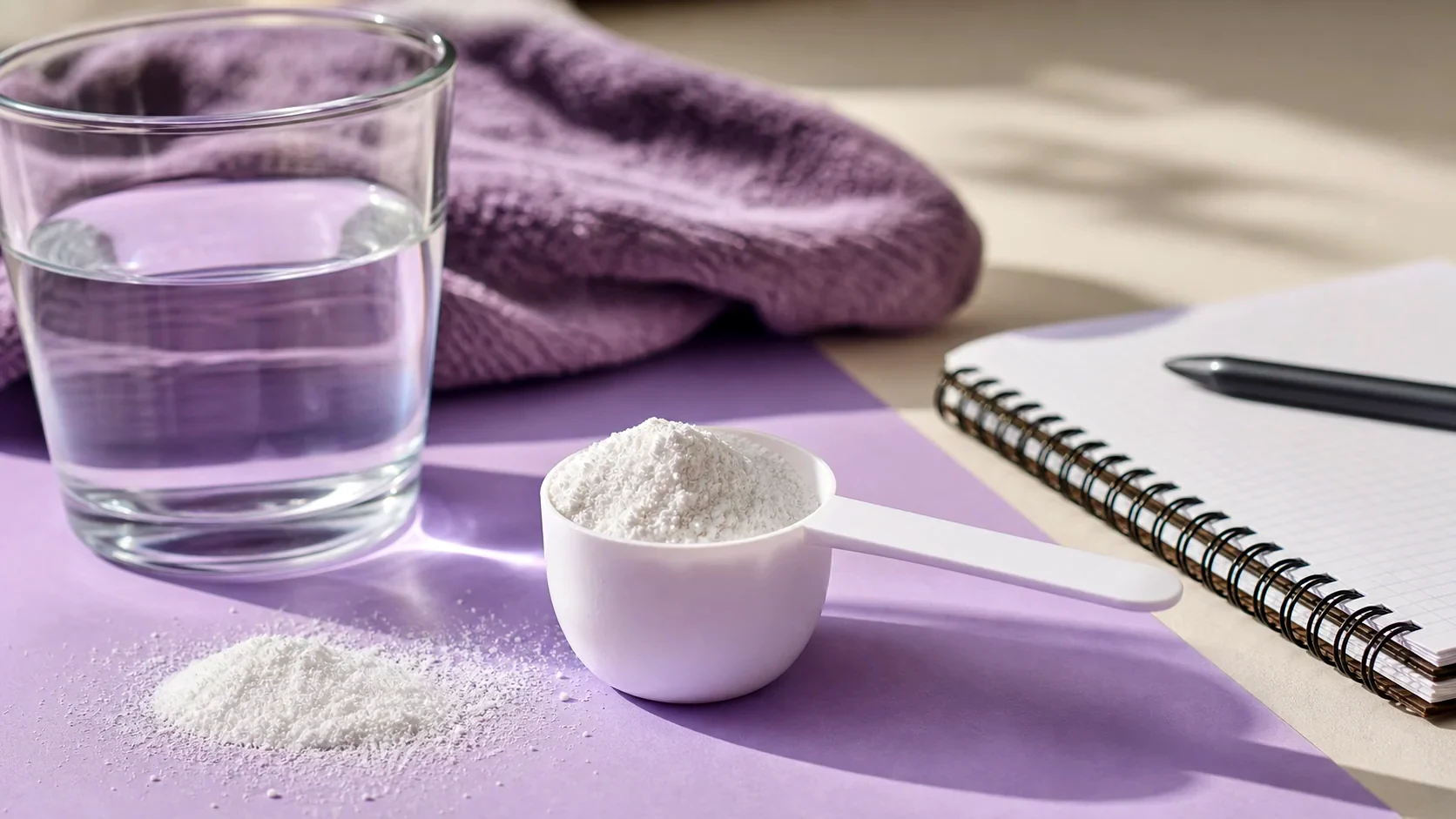
Why the form matters
Creatine monohydrate is the form most people encounter in research and product labels. That does not mean every powder is identical, or that a premium price proves a better result. Compare the actual ingredient, amount per serving, number of servings and any added flavours or blends before comparing front-of-pack claims. A single-ingredient product is easier to audit.
Read the serving rather than the scoop
A scoop is a tool, not a standard measurement. Check grams per serving and whether the label counts a level or heaped scoop. A tub with 60 servings may not represent the same amount as another tub if serving sizes differ. Look for batch or quality information where available, and keep the source date in the editorial record.
What research supports
Creatine has a substantial sports-nutrition literature, but evidence is specific to outcomes, doses and populations. It does not mean every marketing statement applies to every person. Describing it as studied for certain exercise contexts is more accurate than promising a transformation. The product label still matters because purity, dose and added ingredients are part of the real decision.
Cautions and suitability
People with kidney disease, those who are pregnant or breastfeeding, and anyone taking regular medication should ask a qualified professional before using a supplement. A product guide should not diagnose deficiency or direct treatment. It should point readers towards the label and the right professional conversation.
A better product comparison
Record ingredient identity, grams per serving, flavouring, sweeteners, testing claims, preparation, serving count and source date. Separate evidence about creatine as an ingredient from facts about the specific product. That separation keeps a catalogue useful without turning a general research summary into a product promise.
Editorial status
- Author
- PowderedPurple Editorial Team
- Responsible publisher
- PowderedPurple (Pty) Ltd
- Last reviewed
- Next scheduled review
- Clinical review
- Not reviewed by a registered healthcare professional. This article is limited to public sources and editorial explanation.
- Corrections history
- Corrections are logged by PowderedPurple (Pty) Ltd. View the corrections record or email info@powderedpurple.com.
References
Sources were selected for public accessibility and checked on 1 August 2026.